
By mid-year, many teams have already sat through enough update meetings to last a quarter. The slides are familiar, the talking points are predictable, and the energy in the room often drops before the useful conversation starts. Leaders want reflection, honesty and reset. What they often get is a polite review of what’s already known.
That’s where a practical meeting agenda template changes the quality of the conversation. The right structure doesn’t just organise topics. It creates the conditions for people to arrive, contribute and reconnect. For mid-year sessions, that matters more than another round of status updates.
A team does not need another meeting about connection. It needs a structured moment where connection can happen.
Why Your Meeting Needs More Than Updates
Mid-year meetings often carry too much weight and too little humanity. Teams are expected to review progress, acknowledge pressure, reset priorities and leave energised, all inside a tightly scheduled hour. When the agenda only covers metrics, updates and deadlines, people stay in reporting mode. They rarely move into useful reflection.
A stronger meeting agenda recognises that people need a short transition before they can speak candidly. That doesn’t mean turning a business meeting into entertainment. It means using structure to lower barriers, create a little ease and help the team engage as people before they respond as roles.
A well-designed meeting agenda template is not just a list of topics. As Monday.com explains in its guide to meeting agenda templates, effective agendas work best when they include clear objectives, time-boxed sections, assigned roles and follow-up actions. That structure keeps meetings focused and respectful of people’s time. For a mid-year reflection, the same discipline matters, but the agenda also needs a human entry point. Before teams can reflect honestly, they need a small moment to arrive, connect and feel safe enough to contribute.
Practical rule: If the meeting starts with the hardest reflection question, most teams will retreat into safe answers.
How to Start the Meeting With Connection
The fastest way to lose a room is to ask for depth before people feel ready to speak. Teams need a low-risk entry point. That’s why this kit starts with a simple connection prompt rather than jumping straight into performance, pressure or priorities.

Start with one prompt from the free Connection Deck. Keep it light, specific and optional.
The Corporate Challenge Connection Deck is a set of conversation cards designed to spark engagement, strengthen team bonds, and keep energy high. Use them as a warm-up, mid-session energiser, or reflective closing activity to encourage interaction and fun.
Using the four Play Colours, the cards are designed to engage teams in different ways:
🔵 Icebreaker – Fun, lighthearted questions to spark connections and kick off the conversation.
🟠 Team Culture & Dynamics – Questions that encourage reflection on company values, teamwork, and workplace culture.
🟢 Problem-Solving – Thought-provoking challenges that inspire creativity and collaboration.
🟡 Rank These – A fun ranking challenge to get teams debating, justifying, and sharing perspectives.
This isn’t a forced icebreaker. It’s a short, structured way to let everyone speak once, listen once and settle into the room before the formal team meeting agenda begins. That small shift changes the tone of the rest of the hour.
Facilitator notes
- Keep it short: Hold the opener to 5 to 8 minutes.
- Allow people to pass: No one should be pushed to share.
- Choose low-risk prompts: Stay away from anything too personal or performative.
- Name the intent clearly: Say that the goal is helping people arrive, not putting anyone on the spot.
Connection works best when it feels invitational, not compulsory.
For leaders who want a deeper lens on this approach, permission to play as a leadership skill is a useful way to think about the facilitator’s role.
Your 60-Minute Permission to Play Meeting Agenda Template
A good mid-year meeting agenda doesn’t try to do everything. It creates a clear sequence that moves from arrival, to reflection, to action. This one is designed for People & Culture teams, office managers, executive assistants and team leaders who need something they can copy and run.
The 60-minute agenda at a glance
| Time | Agenda Item | Purpose |
|---|---|---|
| 0 to 5 minutes | Welcome and permission to play | Set the tone and explain that the meeting is for pause, reflection and reset, not just updates |
| 5 to 12 minutes | Connection Deck opener | Help people arrive, speak early and engage before deeper reflection |
| 12 to 20 minutes | What are we proud of so far? | Surface wins, progress and moments worth recognising |
| 20 to 30 minutes | What has felt heavy or harder than expected? | Name pressure points in a constructive way |
| 30 to 40 minutes | What helped us work well together? | Identify behaviours, rituals and conditions that supported collaboration |
| 40 to 50 minutes | What do we want more of next quarter? | Turn reflection into practical focus areas |
| 50 to 55 minutes | One small team commitment | Agree on one specific behaviour or ritual to carry forward |
| 55 to 60 minutes | Close with recognition or appreciation | End with energy, acknowledgement and clarity |
How each part works
Welcome and permission to play
Open plainly. Acknowledge that mid-year meetings can become heavy or overly transactional. Then set a different expectation. This meeting is for honest reflection and team reset.
Purpose: Give people permission to participate as humans, not just job titles.
Facilitator notes: Keep this tight. Don’t over-explain play. Frame it as a practical way to lower barriers and improve contribution.
Example prompts:
- What would make this hour useful for the team?
- What kind of conversation does the team need today?
Connection Deck opener
Use one prompt only. More than that starts to feel like an activity block rather than an opener.
Purpose: Help the team arrive and build enough comfort for better discussion.
Facilitator notes: Invite brief answers. Model the tone by going first if needed, but don’t dominate.
What are we proud of so far?
Teams often move too quickly past progress. This section restores perspective and broadens the definition of success beyond headline outcomes.
Purpose: Recognise achievements, effort and moments of growth.
Facilitator notes: Prompt for operational wins, collaboration wins and people moments, not just big project outcomes.
Example prompts:
- What have we delivered that deserves acknowledgement?
- Where has the team shown resilience or initiative?
- What’s a win that might otherwise get missed?
A reflective meeting gets stronger when pride is specific. “We worked hard” is nice. “We kept each other informed under pressure” is more useful.
What has felt heavy or harder than expected?
This is the point many agendas avoid, and it’s often the part teams need most. The framing matters. Don’t ask what went wrong. Ask what felt heavier than expected, and what helped people keep moving.
Purpose: Create room for honesty without turning the meeting into a complaint session.
Facilitator notes: Keep the conversation bounded. Capture themes, not long stories. If needed, remind the room that the goal is shared understanding, not blame.
Example prompts:
- What has felt heavier than expected this half?
- Where have processes, pace or communication created strain?
- What helped us keep moving when things felt hard?
What helped us work well together?
This question consistently produces practical insight because it shifts the room from individual experience to shared behaviour. It reveals what the team should protect, repeat or formalise.
Purpose: Identify the habits and conditions that supported collaboration.
Facilitator notes: Listen for repeatable behaviours. These are often more valuable than broad values statements.
Example prompts:
- What did the team do that made work easier?
- Which rituals or behaviours improved collaboration?
- When did communication feel especially clear?
What do we want more of next quarter?
Reflection only becomes useful when it shapes future behaviour. This section keeps the conversation specific and manageable.
Purpose: Choose a small number of priorities for the next quarter.
Facilitator notes: Push for practical language. “Better communication” is too vague. “Send pre-reads earlier” is easier to act on.
Example prompts:
- What do we want more of in how the team works?
- What should we continue, reduce or simplify?
- What would make the next quarter feel more sustainable?
One small team commitment and recognition close
Many meetings fail because they generate discussion without ownership. Zoom’s guidance on meeting agendas emphasises goals, time allocation, responsible parties, action items and owners, all of which help prevent unbounded discussion and vague follow-up in a clear meeting agenda framework.
Purpose: Translate insight into one shared commitment and finish with recognition.
Facilitator notes: Choose one commitment only. Assign an owner. Then close with appreciation so people leave with energy.
Example prompts:
- What is one behaviour we will commit to next quarter?
- Who will own the follow-through?
- Who deserves appreciation today, and for what?
Facilitation Tips for a Safe and Inclusive Session
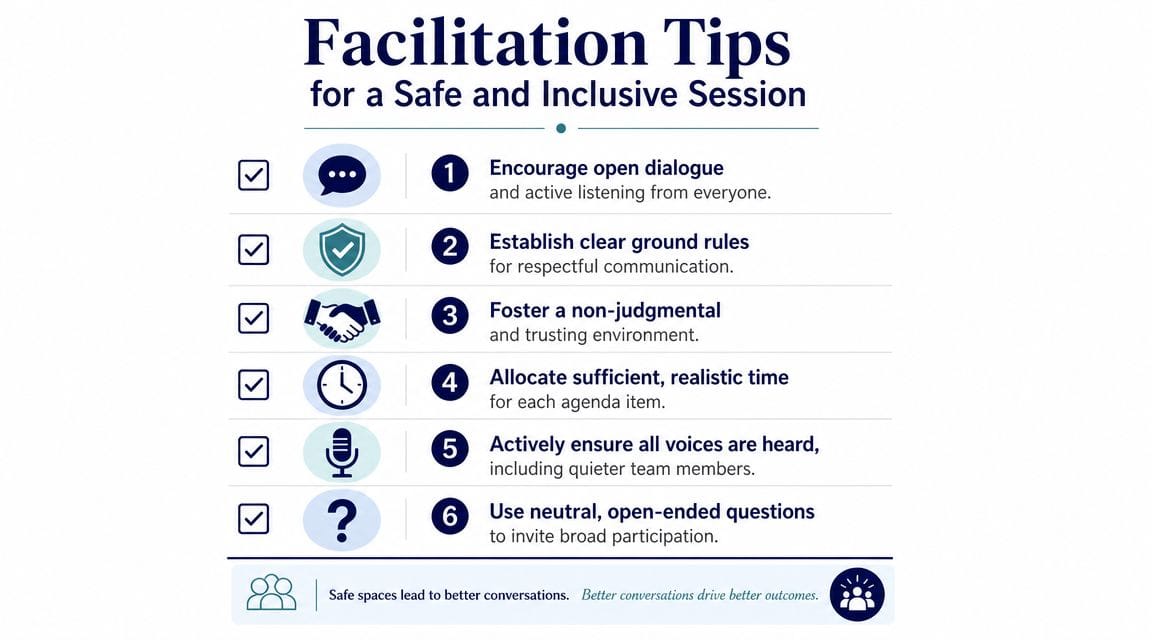
The template only works if the facilitation matches the intent. A thoughtful agenda can still fall flat when the room feels rushed, overly managed or leader-led. Safety isn’t created by saying “be open.” It’s created by what the facilitator does minute by minute.
What helps the room feel safe
- Set ground rules early: Let people know passing is acceptable, confidentiality should be respected, and the conversation should stay constructive.
- Timebox without cutting people off harshly: A visible timer helps. So does naming the remaining time before moving on.
- Use neutral prompts: Ask “what helped?” and “what made this harder?” instead of leading with blame-based wording.
- Watch who is speaking most: If the same voices dominate, invite others in gently.
The room usually follows the tone of the facilitator before it follows the agenda.
What to Do After the Meeting to Maintain Momentum
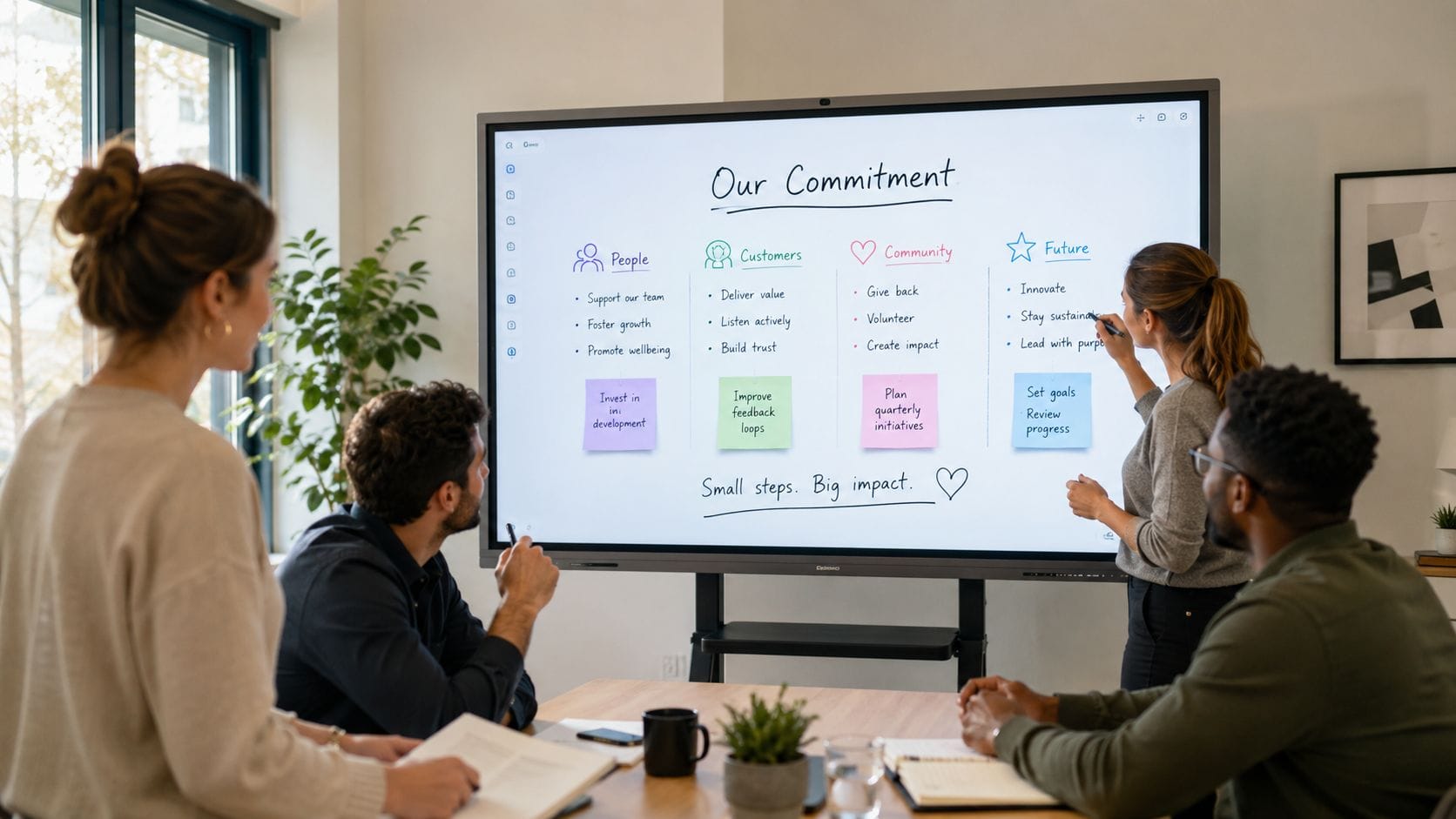
The meeting should end with one clear commitment, one owner and one simple next step. Anything more than that usually gets lost. Teams don’t need a long action register from a reflective hour. They need one practical behaviour they’ll carry into the next quarter.
That commitment might be a new team ritual, a change to communication norms, or a short recurring moment that keeps connection alive. It could be sending pre-reads earlier, opening fortnightly meetings with one reflection question, or closing project reviews with peer recognition. The point isn’t size. The point is follow-through.
Without clear ownership, reflective meetings often create good intent and little else. That’s why time limits, prioritised topics and decision owners matter so much in agenda design, as outlined in the earlier Zoom-based guidance on preventing meetings from expanding without producing action.
A simple post-meeting checklist helps:
- Send a short recap: Include the commitment, owner and any agreed next steps.
- Revisit it soon: Check progress in the next regular team meeting.
- Keep the language visible: Add the commitment to the team’s shared notes or working board.
- Protect the energy: Build on what worked rather than treating the session as a one-off.
For teams that want the reflection to stick, our free 12 week play plan offers useful follow-through ideas.
For organisations that want more than a one-hour reset, Corporate Challenge Events helps teams turn meetings, conferences and offsites into practical moments of connection through play based team building, conference energisers and facilitated team experiences that support culture, communication and performance.




Recent Comments